Search By Artist
- Acacia
- Acacia Plant
- Acer
- Amelanchier
- American Eagle
- American Ginsing
- Annona
- Aquatic Plant
- Aquatic Plants
- Chris Rose
- Mark Catesby
- Arum Plant
- Ash Tree
- Avocado
- Bahama Duck
- Baltimore Oriole
- Barge
- Bay Laurel Tree
- Beetle
- Bell Fruit
- Bignonia
- Bindweed
- Owls
- Birds of Prey
- Ducks
- Flycatchers
- Grackles
- Hawks
- Hummingbirds
- Landfowl
- Parrots
- Partridges
- Pelicans
- Pigeons
- Shore Birds
- Songbirds
- Tropical Birds
- Wading Birds
- Waterfowl
- Bird's Milk
- Birdcatcher Tree
- Bison
- Black Faced Grassquit
- Black Phoebe
- Black Poplar Tree
- Black Skimmer
- Black Tail Fish
- black tern
- Black Walnut Tree
- Blue flowered Bignonia
- Blue Green Snake
- Bluebird
- Boatswain Bird
- Bobolink
- Bromeliad
- Broom Rape
- Brown headed nuthatch
- Brown Pelican
- Brown Water Snake
- Bufflehead
- butterflies
- Butterfly
- Buttonbush Plant
- Buttonwood Tree
- Campion
- Candleberry
- Cardinal
- Carolina Parakeet
- Cashew Tree
- Cassena
- Cat Fish
- Catalba Tree
- Catawba Tree
- Catbrier
- Catchfly
- Caterpillar
- Chico Tree
- Chinquapin Tree
- Chipmunk
- Chrysanthemum
- Cocoplum
- Common Grackle
- Cone Flower
- Coral
- Coral Bean Plant
- Coral Honeysuckle
- Cottonwood
- Cowbird
- Cowslip
- Creeper Bird
- Croaker
- Crossvine
- Dabbling
- Dabbling Duck
- Dogbane vine
- Dogwood
- Dogwood Tree
- Drum Fish
- Dune Grass
- Eastern Meadowlark
- Eastern Screech Owl
- Eastern Whip-poor-will
- Elemi Tree
- Falcon
- False Acacia
- Filefish
- Flower
- Flowering Bay Tree
- Flowers
- Fox Squirrel
- Frutex
- Gentian
- Gentium
- Giant Clawed Crab
- Gordonia
- Great Crested Flycatcher
- Grebe
- Greenbriar
- Greenbrier
- Ground Rattlesnake
- Amphibians
- Fish
- Insects
- Mammals
- Reptiles
- Grouper
- Guajacana
- Gum Elimy
- Gum Tree
- Gumbo Limbo Tree
- Hawksbill Sea Turtle
- helleborine orchid
- Hermit Thrush
- Herring
- Hibiscus
- Highland Willow Oak
- Hollyhock
- Hooded Merganser
- Hop Tree
- Horned Lark
- Hornwort
- House Wren
- Ibis
- Iguana
- Indian Bean Tree
- Indigo Bunting
- Jamaican Oriole
- Jambu
- Jasmine
- Jessamine
- Junco
- Juneberry
- Ketmia
- Killdear
- Kingsnake
- Laurel Leaved Tree
- Leatherjacket
- Ligustrum Tree
- Lily
- Lizard
- Loblolly Bay
- Locust Plant
- Logwood
- Magnolia
- Mahoe Tree
- Mallow
- Mangrove
- Maple Tree
- Mayapple plant
- Engraving
- Mimosa
- Mistletoe
- Mockingbird
- Morning Glory
- Moth
- Mourning dove
- Mouse Deer
- Mousedeer
- Mulberry
- Mushroom
- Myrtle
- Myrtle Tree
- Naseberry
- Needlefish
- Nightshade
- Orchard Oriole
- Orchid
- Osprey
- Oystercatcher
- Painted Bunting
- Passenger Pigeon
- Passionflower Vine
- Pawpaw
- Peacock Flounder
- Perch
- Pignut Hickory Tree
- Pisonia
- Plant
- Plants
- Poisonwood
- Polecat
- Poplar Tree
- Porgy
- Prickly Ash
- Privet
- Purple Martin
- Pygmy Rattlesnake
- Rain Lily
- Red Crowned Flycatcher
- Red Eyed Vireo
- Red Oak tree
- Red Plumeria
- Red Winged Blackbird
- Red Wood tree
- Redstart
- Rhododendron
- Rice plant
- Robin
- Rockrose
- Rose Bay
- Rose Breasted Grosbeak
- Sang
- Sassafras Tree
- sawbill duck
- Sea Grape
- Sea Oats
- Sea Plants
- Sea Robin
- Seabird
- Seagrass
- Seagull
- Sensitive Plant
- Serviceberry Tree
- Shrub
- Simlax Vine
- Smilax
- Smilax Vine
- Snowy Egret
- Solanum
- Soldierwood tree
- Sora Rail
- Southern Bayberry
- Sparrow Hawk
- Spider Flower
- Spiny Lobster
- Stirax
- Sumac
- Summer Tanager
- Surgeon
- Swallow-tailed Kite
- Swallowtail Butterfly
- Sweet Bay Magnolia
- Sweetgum Tree
- Tern
- The Western Plane-Tree
- Thymelaea
- Toad Stool
- Toothache Tree
- Trees
- Trumpet Flower
- Trumpet Vine
- Tufted Titmouse
- Tulip Poplar
- Tulip Tree
- Tuliptree
- Tupelo Tree
- Turkey Vulture
- Turks Cap Lily
- Turnstone
- Turtle dove
- Vanilla
- Viperfish
- Virginia Creeper
- Virginia Snakeroot
- Viscum
- Waddle Thorn
- Wasp
- Water Snake
- Water Tupelo Tree
- Wax Apple
- Wax Myrtle
- West Indian Woodpecker
- Western Plane Tree
- Whistling Duck
- White Cheeked Pintail
- White Plumeria
- Whooping Crane
- Wild Garlic
- Wild Onion
- Wood Duck
- Wrasse
- Yellow Jessamy
- Yellow Poplar
- Yellow Star of Bethlehem
- Yellow-billed Cuckoo
Mark Catesby (1683-1749)
The Natural History of Carolina,. Florida and the Bahama Islands
London, 1731-43. (first edition), 1754 (second edition), 1771-1810 (third edition)
Engravings with original hand-coloring
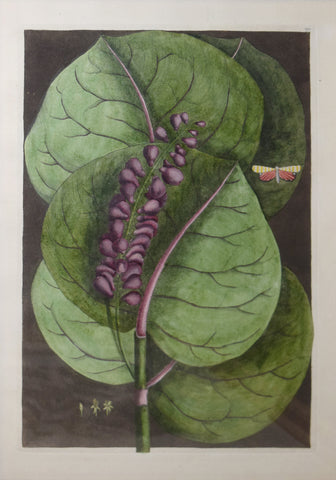
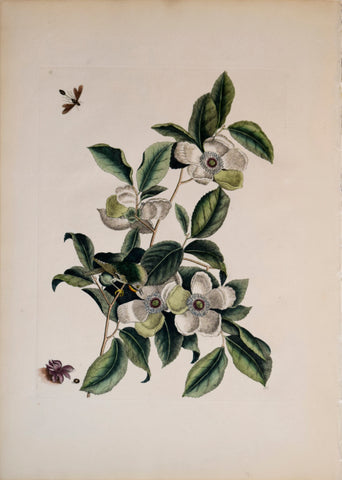
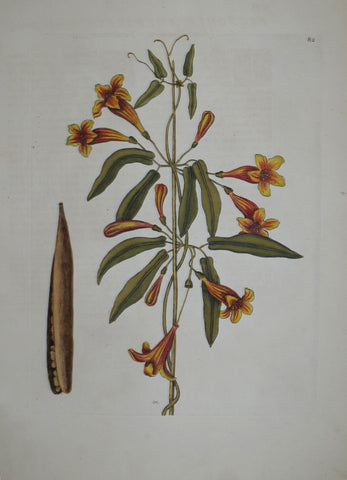
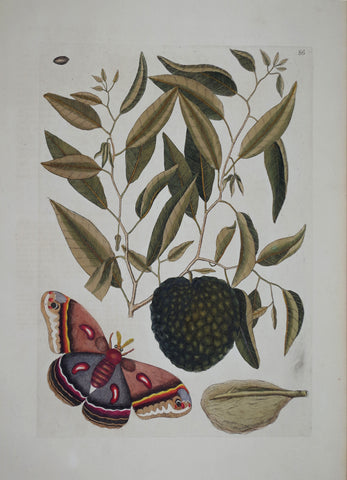
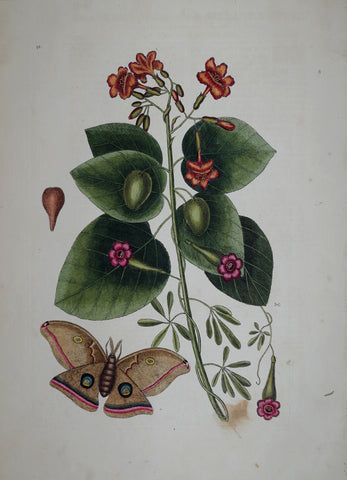
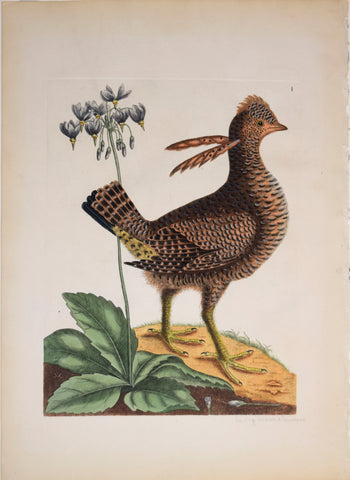
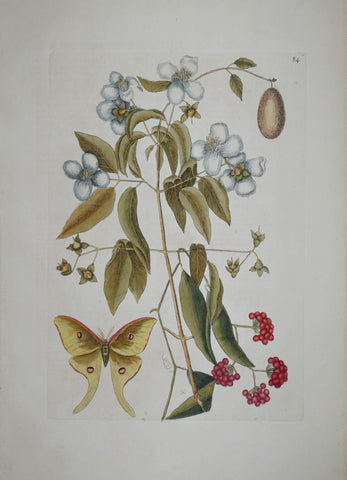
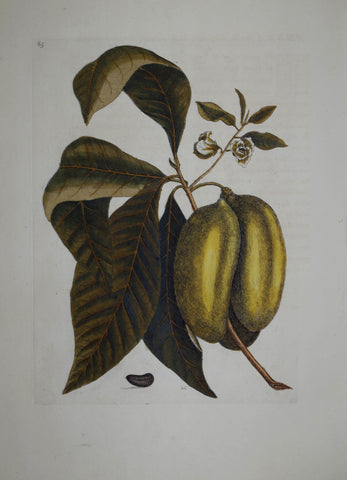
In 1712, the English-born artist and naturalist Mark Catesby embarked on a series of expeditions to the southern colonies of British North America. Catesby was enthralled by the wildlife of the New World, and he spent years traveling by foot through parts of present-day Virginia, Georgia, the Carolinas and the Bahamas. Over the course of his journeys, he encountered and documented uncountable varieties of animal and plant life that were entirely unknown to Europeans. His drawings and written observations were the raw material for an unprecedented project: a scientific account of previously uninvestigated wildlife, with illustrations taken from life.
Catesby initially encountered some difficulty in interesting sponsors in his monumental Natural History. Determined nonetheless to persevere in his project, and also wishing to maintain control over the translation of his drawings into print, the artist learned to engrave copper plates and set out to complete the Natural History himself. He produced all but two of the plates, and painted the impressions himself to further insure their fidelity to his models. The result was the most sweeping, complete and unique natural history study ever done. Despite Catesby's initial difficulties in finding subscribers, his striking finished product received widespread acclaim. Cromwell Mortimer, Secretary of the Royal Society, declared the publication to be "the most magnificent work I know since the Art of printing has been discovered." Catesby's charming, distinctive style sets his work apart from all artists who later followed his example. The overt simplicity of his compositions is deceiving; the artist arranged each of his images with great care, often combining seemingly incongruous elements to create the most artful scene possible. A sense of Catesby's enthusiasm for his subjects is palpable in his engravings.
Very few artists were so personally involved in the completion of a published work, and Catesby's images convey what the artist must have experienced in America: the colors and varieties of the exotic species of birds, fish, animals, insects and plants of the New World. Widely considered the great achievement of 18th-century art and science, Catesby's Natural History of Carolina, Florida and the Bahama Islands has lost none of its power to delight in the 250 years since its publication. This remarkable study of American plants and animals is a monument to Catesby's intelligence, scientific devotion and love of nature. The Natural History has provided an important model for ornithologists and scientists, including John James Audubon, who followed in Catesby's footsteps a century later.